The first spending item on the chopping block is capital expenditure, followed by operating costs and overheads, including sales and marketing expenses.
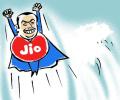
The COVID-19 pandemic and the ensuing lockdown may have put the best of funds on a backfoot of deal activity, RIL, however, has been an outlier. With 10 different investors brought in for its telecom venture Jio Platforms, RIL undertook 12 different transactions since April this year.

With RIL's market capitalisation crossing the Rs 11-trillion mark on Friday, Ambani is ahead of Google co-founders Larry Page and Sergey Brin, the 10th and 11th richest, respectively, and behind Zara founder Amancio Ortega on the Forbes Real-time Billionaires List.

'India should take up defence manufacturing in a more serious manner and encourage greater private participation.'

Govt has already approached World Bank seeking termination of contract. The progress of the project was just 20 per cent though the contract was awarded in 2016.

With the State Bank of India moving the National Company Law Tribunal's Delhi bench to enforce the personal guarantees of Ambani, it will delay the recovery of dues by the Chinese banks which won a UK court order in May this year.

The demand for black oils and specialty products like fuel oil, bitumen, petcoke and sulphur has also shown marked improvement, facilitating increase of refineries throughput.

In a circular dated May 20, Sebi had directed the listed companies to evaluate the impact of Covid-19 on their capital and financial resources, profitability, liquidity position, assets, and ability to service debt. Instead, companies have spoken about the number of plants, warehouses and distribution centres that have resumed operations; work-from-home and safety measures undertaken for employees; and the labour shortage they are facing.

Though Google's investment is minuscule and will not move the needle, it will attract other investors to the company and be a morale booster. Pursuing Vodafone Idea would potentially pit Google against Facebook and an increasingly dominant Jio.

The dispute between RCom and Chinese banks led by ICBC started after Anil Ambani led company defaulted on its loans to Indian as well as Chinese banks. A British court on May 22 asked Ambani to pay nearly $717 million to three Chinese banks within 21 days.
India's harsh lockdown has left companies grappling with temporary closure, chaotic supply chains and depressed demand. Consequently, business plans have been modified.

Urban planners and real estate experts say bad town planning in Mumbai and rising deaths during the ongoing pandemic are a "sad reality". Dev Chatterjee and Raghavendra Kamath report.
India's biggest firm, Reliance Industries, has decided to cut salaries by 10 per cent in its oil and refining divisions. Several smaller companies like Kajaria Ceramics have followed suit with cuts as high as 40 per cent for those earning more than Rs 50 lakh.

Several on-site labourers in the city want to take special trains being run to transport workers back home. The rising number of COVID-19 cases in the city has caused anxiety among them.

Of the 171 Mumbai scribes tested on April 15, 53 tested positive on April 20. Of the 53 tested positive, 31 were treated and discharged on April 26. A large number of positive cases and later a quick recovery within less than a week have baffled many. Amritha Pillay reports.

RIL's debt stood at Rs 3.06 trillion as of December 2019, against Rs 2.87 trillion in March 2019.

The one-time restructuring of loans will help every firm and prevent cost-cutting measures such as lay-offs.

RBI is expecting the rupee to stay close to Rs 75 to a dollar, as COVID-19 forces foreign funds to withdraw from emerging markets.

Experts say the focus is on preserving liquidity as there is uncertainty over the duration and impact of the 21-day nationwide lockdown imposed to check the spread of COVID-19.

Though Kishore Biyani is selling stakes in group companies to pay off debt, a significant share price crash since January this year is making his task difficult.
 © 2026 Rediff.com - Investor Information - Advertise with us - Disclaimer - Privacy Policy - Sitemap - Feedback - About us - Terms of use - Grievances